Entry 002
Why We Built PleoStack: Software Shaped to How Industries Actually Run
Two conversations in one week — one about construction, one about gyms — pointed at the same problem: entire industries running on generic tools bent to fit. So we set out to build purpose-built vertical software, starting with construction.

Praful Rudra · Co-Founder & CEO
5 min read
PleoStack started with two conversations in the same week, about two industries that could not look more different — and the exact same problem underneath both.
The first conversation: construction runs on Excel
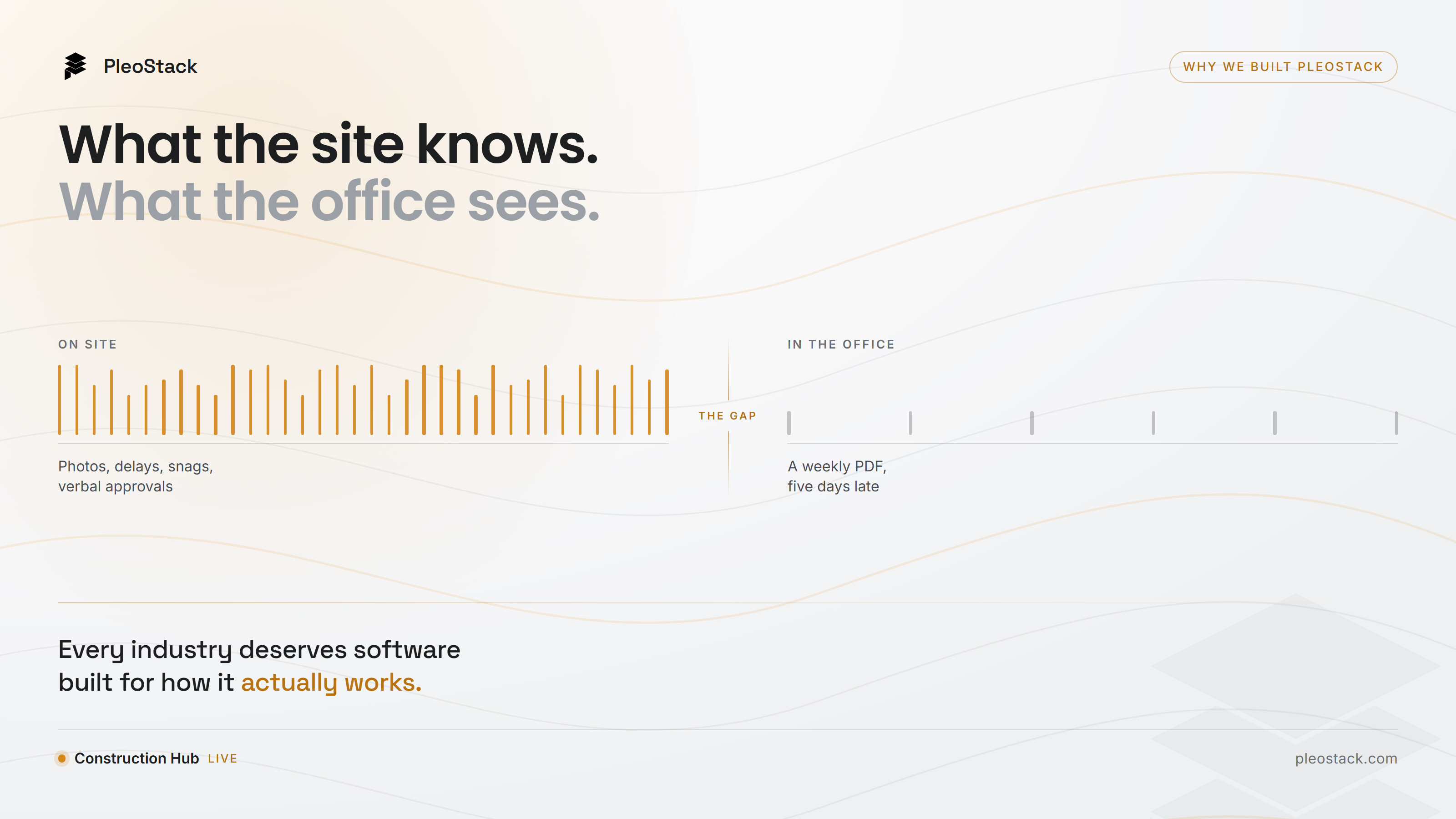
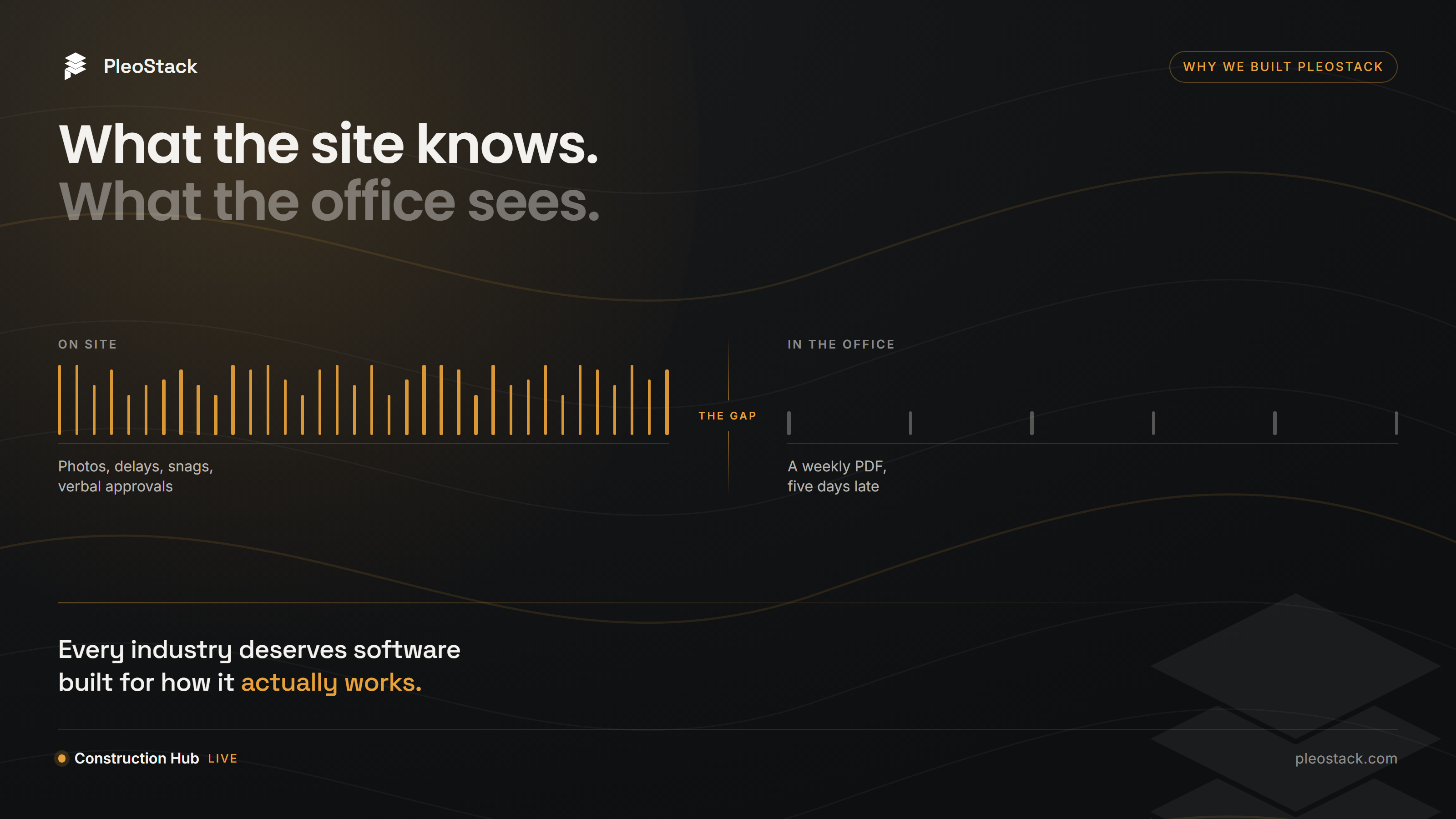
Manju, who leads product with us and spent years as a civil engineer, described how most construction teams in India (and plenty elsewhere) actually run their projects: Excel sheets, paper, and WhatsApp threads. Progress trackers copied between phones. Inspection records photographed and forgotten in chat galleries. Client reports assembled by hand, one weekend at a time.
The tools that exist to fix this fall into two camps. Either they cost so much per seat, or take such a large cut of project value, that only the largest firms can justify them. Or they are general-purpose platforms — the kind built for everything, then bent into a construction shape with templates and weeks of custom configuration.
My first reaction was disbelief. Surely the big contractors, the ones running hundreds of millions in work, pay for something better? It turns out mostly no. The same spreadsheets, the same WhatsApp groups, the same person who is the only one who understands the master tracker.
The second conversation: gyms run on a CRM with extra steps
A few days later, Arjun described the fitness world he knows. Gym management software, he said, is basically a CRM with extra steps. It handles memberships, entry, and staff — and then almost nothing that a gym actually is. No real depth on member assessments, personal details, training history, or the day-to-day work a trainer does. The specific part of the business, the reason a gym is a gym, was the part the software ignored.
Different industry. Different people. Identical shape to the problem: the specialized work — the part that makes the business what it is — was either missing, or painted on top of something generic.
The pattern was the product
So Hemanth and I looked closer. We talked to more people, looked at more companies across both industries. The same picture kept repeating. Teams either paid a fortune for tools that still needed heavy configuration, or they used generic software that covered the easy, universal parts and left the hard, specific parts to spreadsheets and messaging apps.
The realization
Generic software solves the parts every business shares. It struggles with the parts that make each business distinct — and those distinct parts are usually where the real work, and the real money, lives.
The obvious move would have been to build one operations tool for construction, and a separate one for gyms, and repeat that forever. We decided against it. Building the same generic core again and again, then decorating it per industry, is exactly the pattern we thought was failing people.
Instead we chose a harder starting point: build a strong platform core once, and then, for each industry, build the specialized layer the way that industry actually works — purpose-built, not templated. And where the shared core genuinely cannot serve an industry's reality, we build what it needs rather than asking the industry to bend.
The name
That decision is where the name comes from. Pleo is from the Greek for plenty; stack is what we are building on top of the core. PleoStack: a growing stack of vertical software, each layer built for how a specific industry works, all standing on one dependable platform.
Not a generic tool with an industry skin. Not a different codebase for every vertical either. One core, many purpose-built verticals.
What we are actually building
The goal is straightforward to state and hard to earn: build software so specific to an industry that it becomes the whole system a team needs to run that part of their business. Not one of five tools stitched together — the system of record for the work itself.
- A platform core that handles what every operation shares: structure, records, roles, reporting.
- A vertical layer per industry, built around that industry's real workflows and vocabulary.
- Room to add whatever a vertical genuinely needs, instead of forcing a compromise.
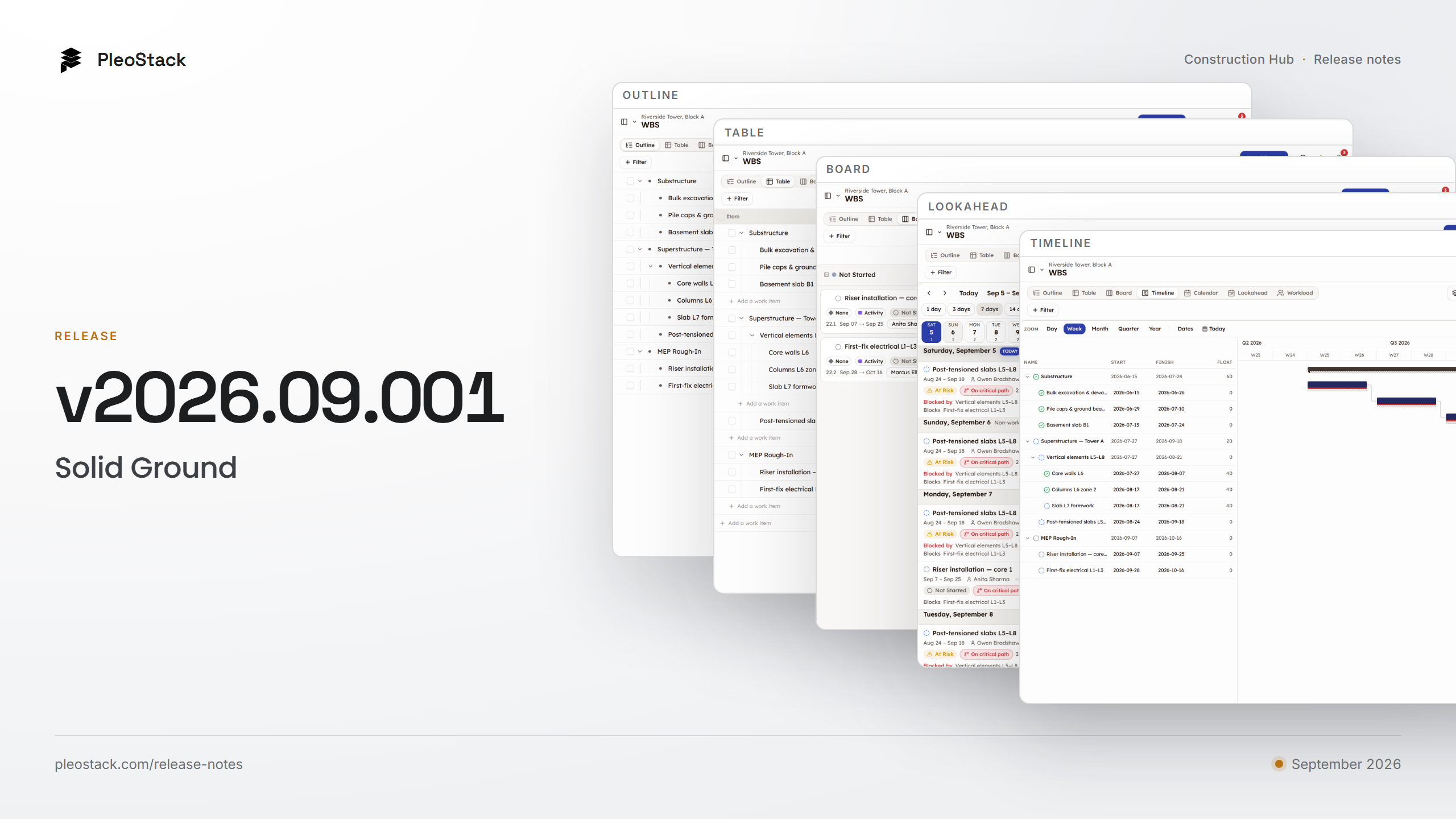
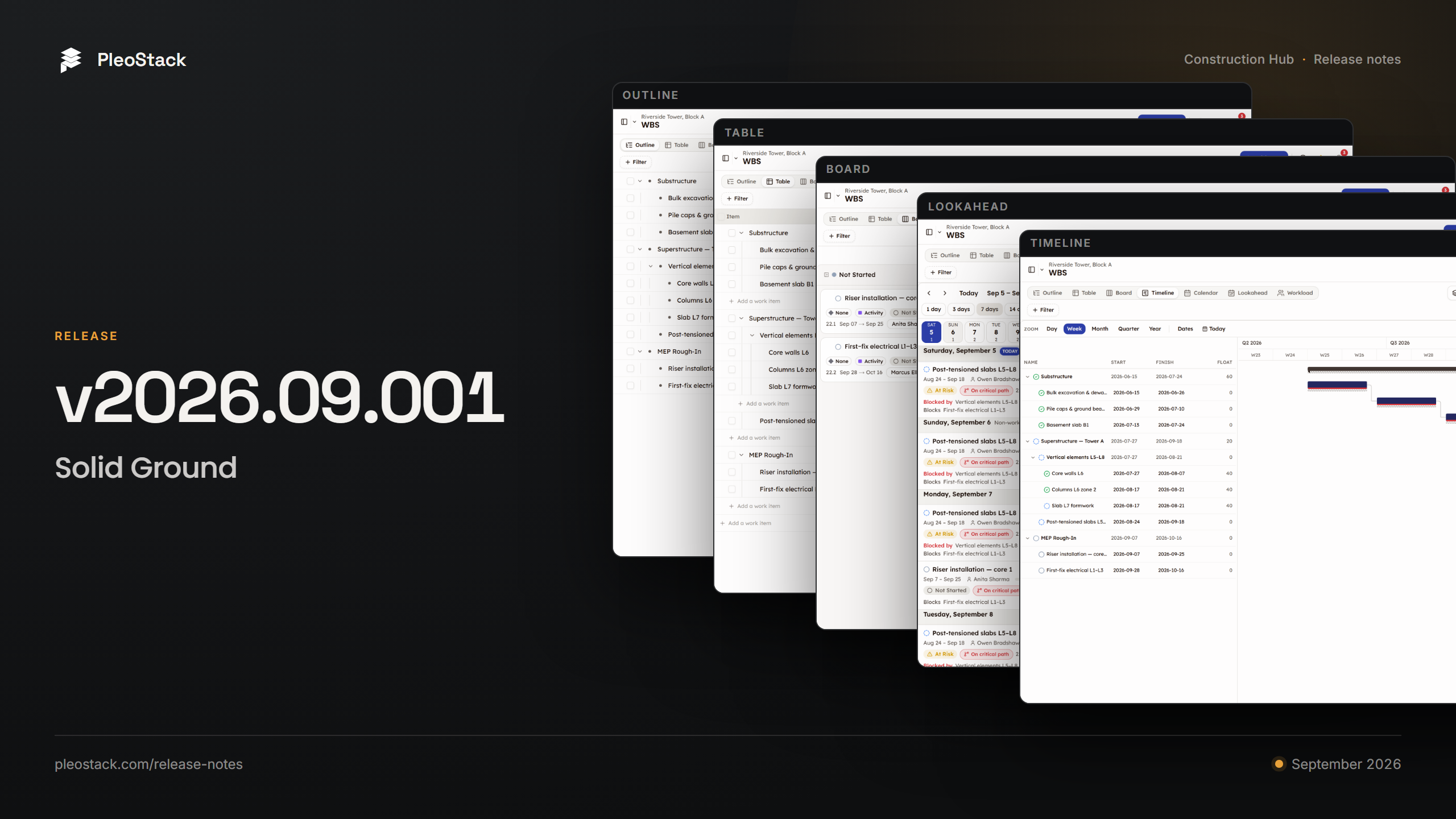
Construction is first, and it is live today. It replaces the spreadsheet-and-WhatsApp stack with one place for work breakdown, inspections, safety, site records, documents, and client reporting. If you want the detail, our head of product Manju has shaped it around exactly the field-to-office gaps he lived through — and we cover the launch in PleoStack Construction Hub is live.
Right now, all of it is proven through Construction — going deep on one industry, earning it properly, before we extend the stack any further. The same principle carries into whatever comes next.
A note on AI
AI runs through the core — it can take on the repetitive, time-eating work: drafting reports, summarizing a day on site, catching what needs attention. But we know not everyone wants software that leans on AI, and we respect that. Every critical workflow works fully without it. The AI is there when it helps, and out of the way when you would rather it stayed there.
That is the whole idea behind PleoStack: build complete, purpose-built software for how an industry really runs, and let the technology serve the work instead of the other way around. Construction today, more to come. If you run construction projects, book a demo and tell us where your current stack breaks — that is exactly what we built this to fix.